

Employability
It can feel pretty tough to find good work, education or training these days. Maybe you don’t know what you want, or you don’t know where to get started. You might have barriers getting in your way, such as transport or mental health.
That’s why Sheffield Futures offers employment guidance – not instructions, because your employment journey is your own. We’re here to help you discover the options available to you and take steps together to get you on the path you want to be on.

Referrals are currently closed while we deliver the Summer Jobs Programme.
For further updates on Employability, keep an eye on our social media.
We deliver various programmes throughout the year focused on supporting local young people to find good work, education or training. Check out our current programmes to see what’s right for you.
In every programme, you’ll work with a dedicated Employment Coach, who will spend time getting to know you and understanding your situation and your hopes for the future.
Current programmes:

How does it work?
Our Employability Team
-

Charmaine Myers
Service Coordinator
-

Jane Dyson
Project Coach
-
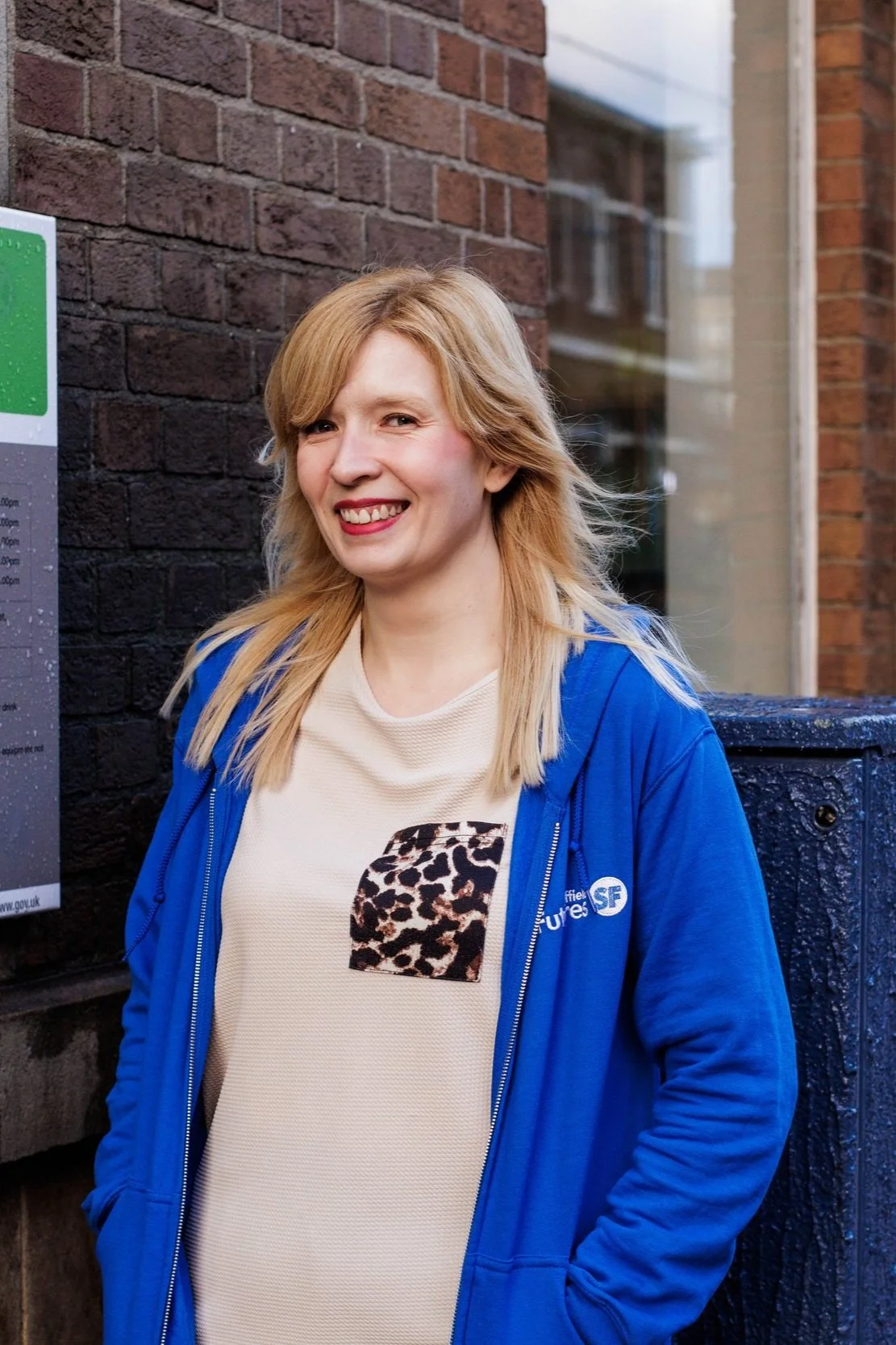
Gemma Nally
Project Coach
-

Chelsea Wilkins
Project Coach
I’m a young person looking for careers advice. Is that something you offer?
Yes! The first step is to check with your Careers Lead or Head of Year to see if Sheffield Futures already work in your school.
If that’s the case, ask them to arrange an appointment or let you know about any upcoming drop-in sessions we’re running.
You can find out more on our Careers page.

Real people, real stories

Positive mental health is key to seeking, starting and maintaining employment.
That’s why wellbeing is an integral part of our employment work, and why we link to and from our mental health and wellbeing service, Door 43.




Summer Jobs Programme
Our Summer Jobs Programme is a six-week paid initiative taking place over this Summer, for young people aged 16-20.
-
The Summer Jobs Programme is a six-week initiative for young people aged 16-20 at risk of violence, helping them gain skills, confidence, and a brighter future. It includes a one-week pre-employment training for the young people, followed by a five-week paid work placement.
The programme is part of a study to help us understand if young people benefit from this programme, and whether it’s a good idea to offer it to even more young people in the UK. The information we collect helps government and organisations supporting young people make decisions that can improve life for you and other young people.
-
Referrals for the Summer Jobs Programme 2025 are now closed.
To qualify for the programme, young people must have met the eligibility criteria.
This year, the programme is also running as a Randomised Control Trial (RCT). This means that if they registered following referral, young people will be randomised into either a control group of the intervention group, with a 50% chance of a summer job.
However, a referral does not guarantee a place on the programme and not everyone who is referred will be registered to the programme.
-
The Summer Jobs Programme aims to build evidence on the best ways to support the most vulnerable young people in our country by keeping them safe and improving their future involvement in education, training, and employment.
The programme successfully engaged 500 young people in 2024, and this year the programme is expanding with the inclusion of a Randomised Control Trial (RCT).
Young people have a 50% chance of paid work experience (as long as there are placements available). A computer programme with randomly place them into one of two groups:
Group 1: This group of young people will receive a placement with Summer Jobs
Group 2: This group of young people will not receive a placement with Summer Jobs. If you are placed in this group, Sheffield Futures will continue to support you on your journey through our regular employability offer.
For more information, visit UK Youth’s website.
-
The full list of criteria can be found here.
To be accepted onto the programme, the young person must meet all of the criteria in Column 1 and at least 1 of the criteria in Column 2.